 Dailytech
Swelling Ground Gave Hawaii's Lava Fountains Their Warning
Science·October 11, 2026
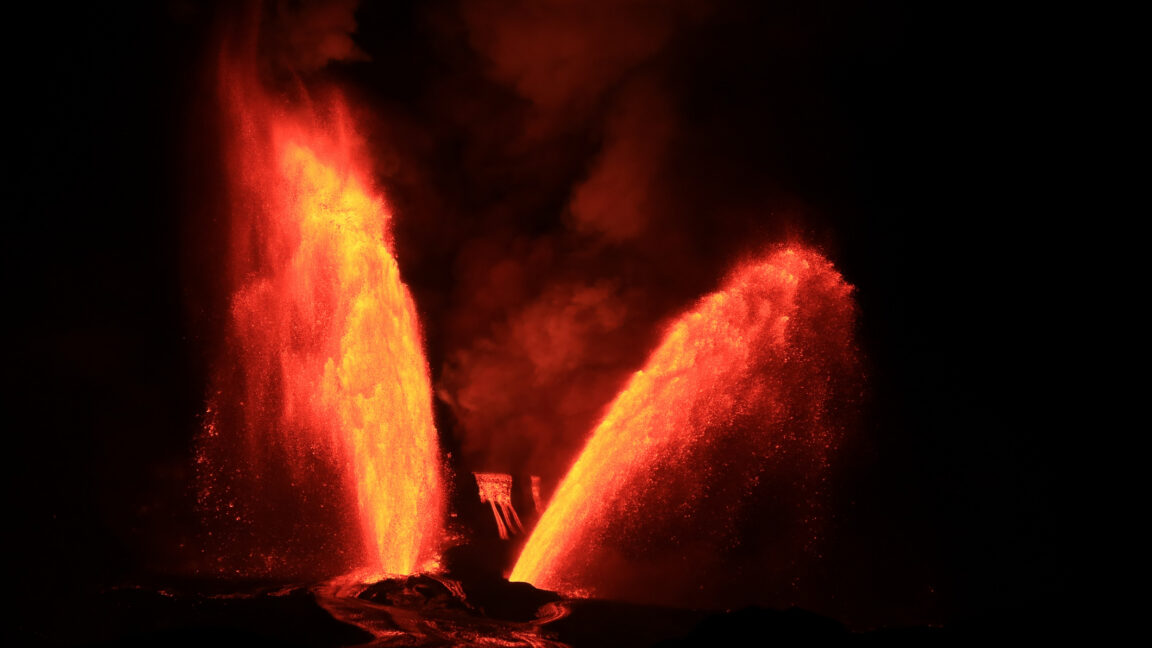
Before the lava fountains began throwing molten rock into the air, the ground in the area was rising at a striking pace, climbing roughly half a meter every day. Swelling that fast is one of the clearest signs that magma is collecting in a reservoir below the surface and pushing the overlying rock upward.
The fountains are what happens when that pressurized magma finds a way out. Magma rich in dissolved gas rises quickly through a vent, and as the gas comes out of solution and expands, it propels liquid rock skyward. Generally, the more gas the magma carries and the faster it climbs, the more forceful the fountain tends to be.
Monitoring teams track this kind of change closely. Tilt meters, GPS stations and satellite radar can pick up small shifts in the shape of the land, and a sudden speed-up in uplift often comes before a change in eruptive activity. Because the swelling came first, scientists can read the deformation record as a timeline of the magma system filling and building pressure.
The broader point is that the glowing fountains are only the visible end of a process that starts underground. The most useful signals tend to appear in the ground data long before anyone sees lava in the air, which is why researchers watch the land as closely as they watch the eruption itself.
Reporting based on an external source.