 Dailytech
A 1,000-Mile Cloud on Mars Could Point to Ice Physics Never Seen on Earth
Space·October 25, 2026
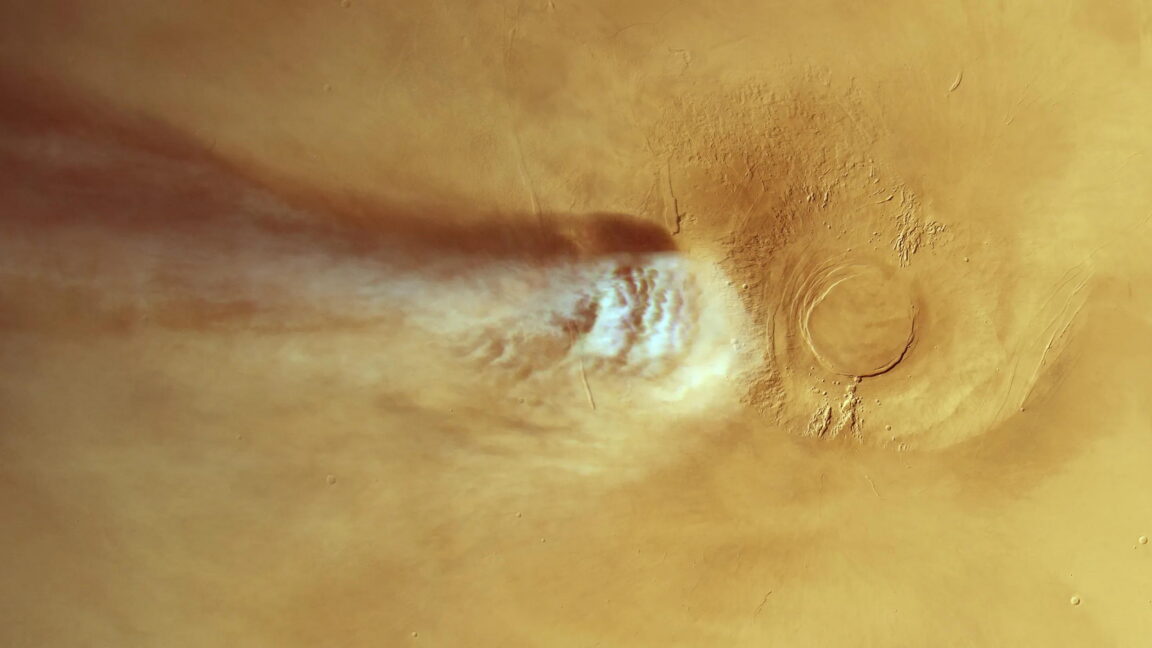
A new computer model suggests that a cloud on Mars stretching roughly 1,000 miles may be forming ice through physics that no one has directly observed before. The idea is still a prediction, but it points to a gap in how scientists currently explain clouds beyond Earth.
Martian clouds form in an atmosphere that is far thinner and colder than our own, so the conditions that drive ice formation there can differ from what meteorologists see at home. A cloud of this scale would be a large system in its own right, and the model's authors argue that its behavior cannot be fully explained by the processes already documented.
The source material describes the model's conclusions but does not explain how it was tested against existing data, so readers should treat the result as a hypothesis rather than a settled finding. Confirming it would likely require direct measurements from orbiters or landers that can track cloud structure and ice particles over time.
If the model holds up, the implications extend beyond Mars itself. Better understanding of how ice forms in extreme atmospheres could sharpen forecasts of the planet's water cycle and inform how scientists read cloud behavior on other worlds.
Reporting based on an external source.